Adoption Competency Definition
Adoption competency is the term used to describe:
- a mental health clinician who has studied adoption and relinquishment issues and uses evidence-based therapy for adoption triad members (adoptees, birth parents, adoptive parents); and
- a professional development training program that trains mental health professionals on relinquishment and adoption’s impact on adoption triad members, as well as evidence-based therapy techniques.
Mental health professionals and professional development training programs give themselves the label of adoption competent. There is no national association of adoption-competent therapists that has established a definition of adoption competency, a core curriculum, or a standardized training program that mental health professionals must complete to become adoption competent. With no evidence-based core curriculum for clinical work with all three members of the adoption triad -adoptees (youth and adults), birth family, and adoptive families- every mental health professional or adoption competency training program is free to call themselves adoption competent.
There are “adoption competency training” programs for mental health professionals that refer to their program as evidence-based training. Based on a review of the adoption curricula by this author, these adoption competency training programs focus solely on adoption issues for youth and their adoptive families. This author is unaware of an adoption competency curriculum that includes training on working with birth families, adults who were adopted, and relinquishment trauma. It is not that youth-focused adoption training programs are not informative; rather, in this author’s opinion, to be truly adoption competent, adoption competency training programs should include training on working with birth parents and adult adoptees in addition to working with adopted youth and their families.
This blog post is the author’s views on adoption competency education and training with the goal of helping adoption triad members (adoptees, birth parents, adoptive parents) and their extended families (the adoption constellation) make informed decisions when choosing an adoption-competent therapist.
The Basics of Adoption Competency
A mental health professional with clinical training on adoption issues understands that adoptees’, birth parents’, and adoptive parents’ history, pre- and post-adoption traumas, needs to be taken into greater consideration when doing an adoption-sensitive assessment. Pre-adoption traumas for adoptees may include fetal alcohol exposure, stressful in utero experience, neglect, abuse, orphanage, and foster care. Post-adoption traumas include psychological abuse when an adopted person was raised “as if” they were born into their adoptive family and when birth parents are treated “as if” they did not lose a child to adoption. For a more detailed discussion of post-adoption issues for adoption triad members visit the core issues of adoption webpage.
To truly understand an adoption triad member’s lived experience and earn their trust, professionals need to understand society’s and the business of adoption’s role in creating and reinforcing the trauma(s). When adoption is treated as a transaction between families, with a disregard for family permanency, transracial adoption issues, and sealed records, among other issues, trauma can result. When a mental health professional conducts a clinical assessment with a birth parent, the assessment should inquire if a birth mother was sent away, coerced, or groomed to relinquish their child, or not given options counseling. When working with an adoptive parent, the mental health professional should inquire whether the parent believes society’s misconceptions that a child is disloyal for wanting to talk about their birth family or about how they are impacted by being adopted. Discussion with an adopted person should include how they have been impacted by having no contact with their first family and by having their records sealed.
Mental health professionals need to understand that big T traumas and little t traumas[1] can have an enormous impact on the brain and body of first parents, adopted persons, and adoptive parents. This author believes adoption traumas are made worse when the impact of relinquishment, adoption microaggressions, and other adoption traumas (i.e., transracial adoption and late-discovery adoption) are not acknowledged. This lack of acknowledgment is referred to as traumatic invalidation. Birth families do not go on with their lives as if relinquishment did not have an impact on them. Many first mothers have post-traumatic stress disorder from the relinquishment and how they were treated. Adoptive families are more complicated than families with biological children. Thus, a short-term, behavior-focused assessment and treatment plan is often not appropriate for adoption triad members with trauma histories.
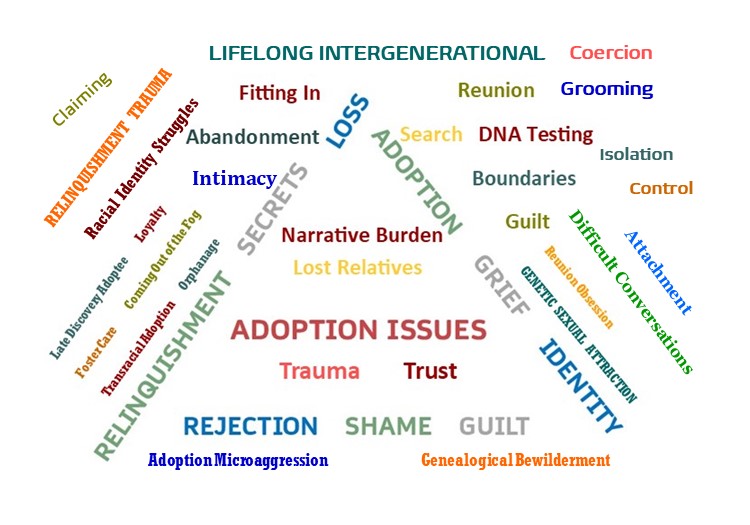
Key to understanding the lifelong journey of being a birth parent, adopted person, and adoptive parent is understanding the core issues of adoption[2]. The core issues of adoption paradigm states that while there may be positives in adoption, there are also losses experienced by all adoption constellation members – birth parents, adoptees, and adoptive parents and their extended families. Other core issues are rejection, abandonment, grief, identity, guilt, shame, loyalty, fitting in, intimacy, control, claiming, and entitlement. How much a core issue affects an individual depends upon their personality and life experiences. Depression can be a normative response to the enormous losses felt by an adoptee or birth parent. Some adoptive parents may grieve as they process losses related to having a child who is not a birth child, and the unique complexities of adoptive families.
The assessment conducted by an adoption-competent therapist with a depressed adoption triad member would have a different focus and might use a wider range of interventions than an assessment conducted by a traditionally trained mental health professional.
A birth parent should be evaluated for post-traumatic stress disorder and complex post-traumatic stress disorder due to relinquishment and how they were treated pre- and post-placement. Birth parents with crisis pregnancies have often been shamed and isolated, which makes the trauma of relinquishment worse. Adopted persons should be evaluated for post-traumatic stress disorder and complex post-traumatic stress disorder. Many adoptees have an elevated risk for PTSD, anxiety, and depression due to birth mothers experiencing trauma during pregnancy. When adopted persons are raised in families that do not acknowledge the lived experience of being an adopted person, it adds additional stress.
An adoption-competent therapist will evaluate the level of attachment a child has with their adoptive parents. Children who were neglected, abused, spent time in orphanages, or in foster care may not be attached to their parents the same as children who have not experienced trauma. Thus, an adoption-competent therapist would not assume a poor relationship between a child and an adoptive parent is always the result of current family dynamics. An assessment would include the child’s early history as well as the adoptive parent’s attachment style. Assessments of children often include an evaluation of harmful prenatal alcohol, drug exposures, or starvation as an infant. An adoption-competent therapist would not assume a child’s misbehavior is willful disobedience, but might consider whether it is a result of early childhood adverse experiences. Adopted youth with significant difficulties should be evaluated for developmental trauma[3].
An adoption therapist understands that a birth parent may struggle with the question, “Am I a parent if I am not the parenting parent?” Individuals who were adopted need to figure out how they are like their birth parents, their adoptive parents, and which characteristics are unique to them. Identity issues are more complex when children are of a different race than their adoptive parents. Identity also needs to be reassessed after adoption reunions.
Today it is common for birth relatives and adoptive families to have contact after adoptions are finalized. Yet there are very few role models and mentors in open adoption relationships available to adoption constellation members. An adoption-competent therapist understands the complexity of open adoption relationships and the diversity of these relationships.
Adoptions that were closed, meaning there was no contact between the birth family and adoptee, are being opened all the time. Sometimes this happens extremely quickly with direct-to-consumer DNA tests, the Internet, and social media. An adoption-competent therapist with training in adoption search and reunion can help an individual prepare emotionally for an adoption reunion before making contact, as well as provide insight and guidance for complicated adoption reunion relationships. Additionally, adoption-competent therapists should have insight into the impact of trauma and genetic sexual attraction on birth parents and adoptees in reunion.
While there are more similarities than differences between parenting children who were born into families and parenting adopted children, there are differences. Adoptive parents may take their child’s need to talk about their birth family as rejection. Adoptive parents also need to figure out how to explain difficult birth histories to their children. An adoption therapist understands that there are additional complexities to adoptive parenting.
Adoptive parents may not know how to talk to their children of color about racial issues or know how to promote a positive racial identity in their child. Parents frequently find it easier to teach their child about culture -food, traditions, music, history- than the more complex racial issues of prejudice, stereotypes, and white privilege. An adoption professional can educate an adoptive parent on how to help their child develop a positive racial identity and how to deal with racism, stereotypes, and white privilege.
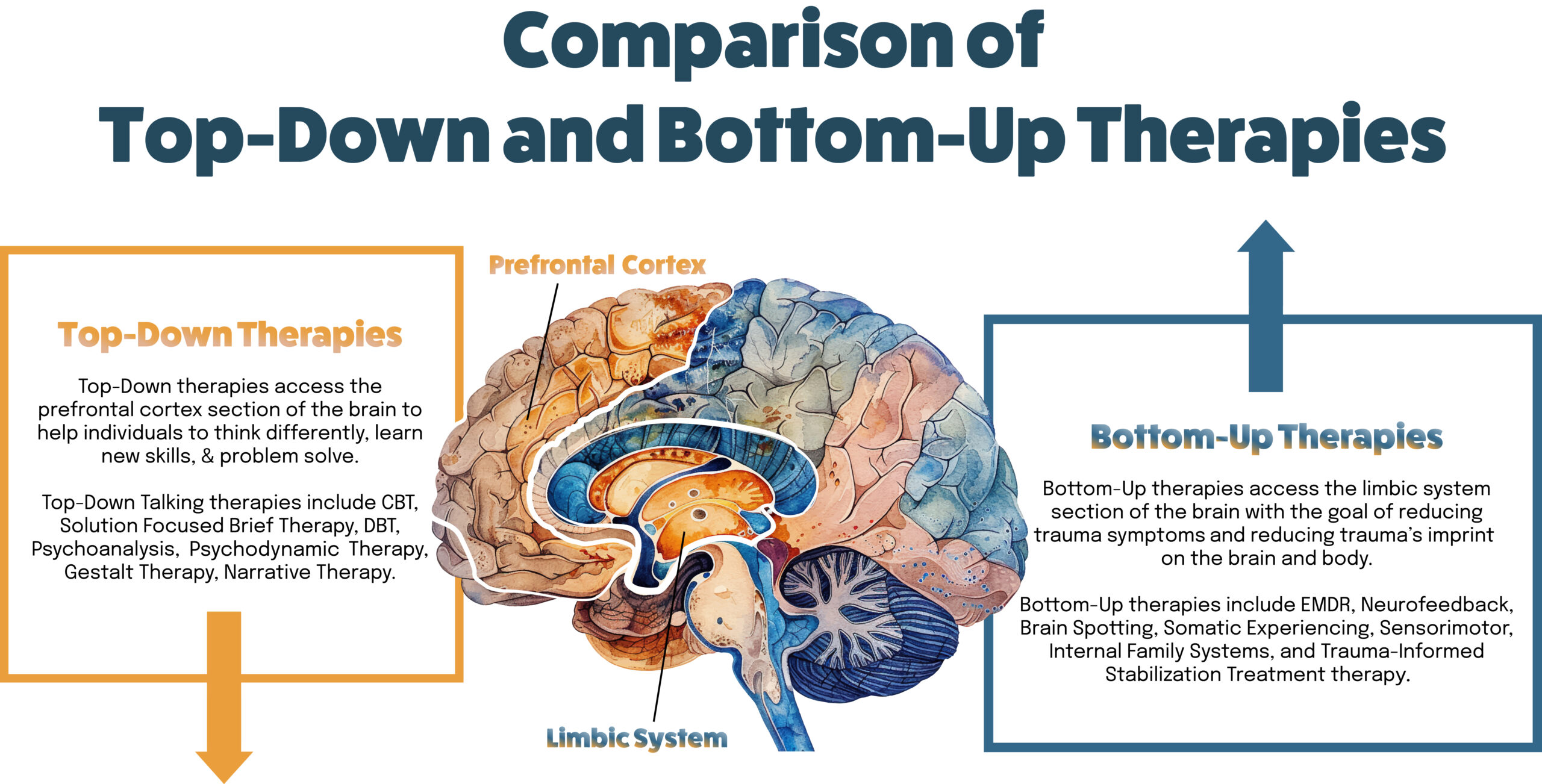
Individuals seeking help with attachment and adoption traumas should talk to a prospective therapist not only about their training in adoption issues, but also about their training in attachment therapy and trauma therapy. This is extremely important because the brain and body can be impacted by trauma,[4] and talk therapy alone may not only be unhelpful but potentially harmful. A therapist could be adoption competent but not trauma competent or attachment competent.
Why it is difficult to find a mental health professional that knows adoption issues
The majority of social work and mental health professionals’ graduate degree programs do not include training for clinicians on the impact of relinquishment and adoption on adoption constellation members (birth parents, adoptees, adoptive parents, and their relatives). The lack of graduate-level adoption competency training often leads otherwise knowledgeable mental health professionals to believe they are adoption-competent therapists when they have had no clinical training on relinquishment and adoption issues.
The situation is made worse when mental health professionals believe the misinformation society has promoted about adoption. This can result in harmful advice to adoption triad members. Adoptive parents have been told to raise their children “as if” they were born into their family and that, if their child asks about their birth family, the adoptive parents must be doing something wrong. Birth parents have been told not to think about their child lost to adoption and to move on with their lives. Adoptees have been told they are disloyal if they want to contact their birth family. Adoptive parents seeking support for their acting-out children have been told by their therapist to give their child back.
While some mental health professionals without adoption training may have a natural understanding of complex adoption issues, a mental health professional with adoption-issues training will more likely have a greater knowledge base for working with adoption triad members.
Ideally, an adoption-competent therapist would have training specific to trauma treatment. This should include using a treatment framework for the three stages of treatment for complex PTSD and be trained in at least one evidence-based trauma therapy. Most trauma survivors benefit from learning stress management techniques in therapy.
When interviewing a prospective adoption therapist, individuals should ask prospective therapists for details about where they received their adoption competency training, including adoption conferences, adoption books, professional development workshops, and research, as well as their training in the treatment of trauma disorders.
Trauma-informed therapies utilize both top-down psychotherapy techniques and bottom-up psychotherapy techniques.
Adoption Competency Resources
- A Need To Know: Enhancing Adoption Competency Among Mental Health Professionals, Donaldson Adoption Institute2013_08_ANeedToKnow Donaldson Competency
- The Importance of Using an Adoption Competent Therapist Adoption Network Cleveland
Attachment and Trauma Resources
- van der Kolk, B. (2014). The Body Keeps the Score- Brain, Mind, and Body in the Healing of Trauma. Viking
- Attachment and Trauma Network https://www.attachmenttraumanetwork.org/parenting/
- Dyadic Developmental Psychotherapy https://ddpnetwork.org/about-ddp/dyadic-developmental-psychotherapy/
- Trust Based Relational Intervention, Kayrn Purvis Institute of Child Development https://child.tcu.edu/about-us/tbri/#sthash.oMDCAPG7.dpbs
Footnotes
[1] Shapiro, F. (2018). Eye Movement Desensitization and Reprocessing (EMDR) Therapy 3rd edition Basic Principles, Protocols, and Procedures, The Guildford Press
[2] Roszia, S. K., Maxon, A. D. (2019). Seven Core Issues in Adoption and Permanency, Jessica Kingsley Publishers
[3] van der Kolk, B. A. (2005). Developmental Trauma Disorder Toward a rational diagnosis for children with complex histories, Psychiatric Annals, 35(5), 401-408.
[4] van der Kolk, B. (2014). The Body Keeps the Score- Brain, Mind, and Body in the Healing of Trauma. Viking
Disclaimer: While Marie hopes that you find the information on her website useful and informative please note- the information contained in this website is for general information purposes only. There are no representations or warranties of any kind, express or implied, about the completeness, accuracy, reliability, suitability, or availability with respect to the resources listed on the website or the information, services, or related graphics contained on the resources listed on her website. Any reliance you place on such information is therefore strictly at your own risk. The website has links to other websites which are not under the control of Marie Dolfi, LCSW. Marie has no control over the nature, content, and availability of those sites. The inclusion of any links does not necessarily imply a recommendation or endorse the views expressed within them.